


What Oil Does A Nissan Altima Take?
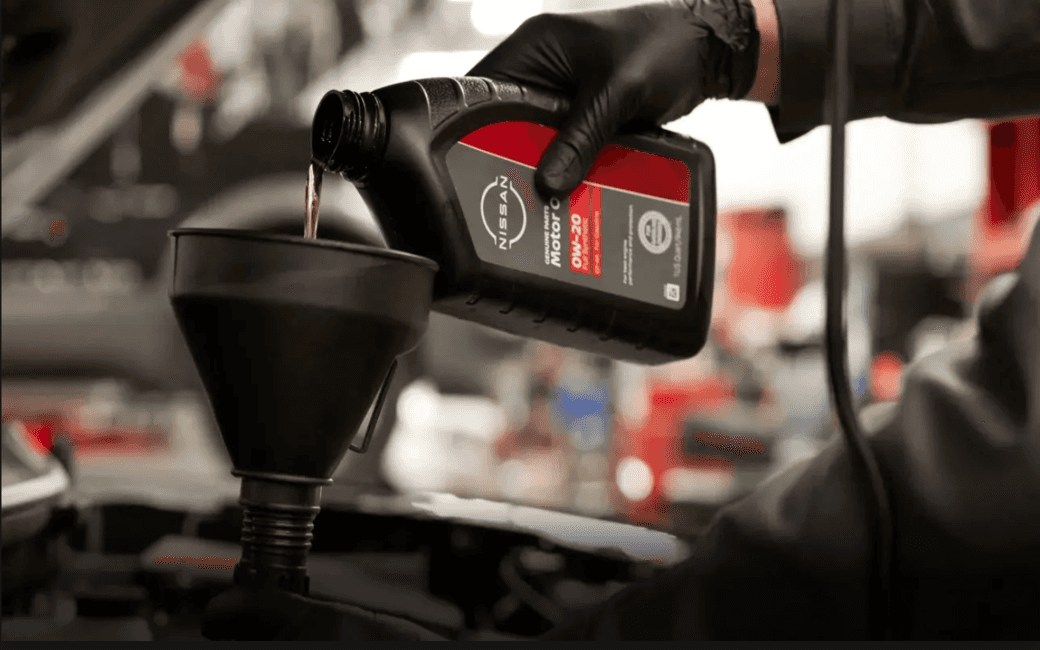
Photo Source/Copyright: NISSAN USA
Key Takeaways
- The Altima’s 2.5-liter four-cylinder engine calls for SAE 0W-20 motor oil.
- Look for the API Certification Mark: Genuine Nissan Motor Oil 0W-20, or an equivalent meeting API SP and ILSAC GF-6A.
- A full oil and filter change takes roughly 5.4 quarts; always confirm the level on the dipstick.
- Nissan publishes two maintenance schedules, normal and severe, and your driving conditions determine which one applies.
What type of oil does a Nissan Altima take? The answer is SAE 0W-20, and because this sedan is built around a single 2.5-liter four-cylinder engine, there’s no guesswork about which grade belongs in the crankcase. Below you’ll find the certification to look for, how much oil a full change requires, and how to judge your service interval.
What Type of Oil Does a Nissan Altima Take?
The 2.5-liter four-cylinder engine is specified for SAE 0W-20 motor oil. When you pull a bottle off the shelf, the detail that matters most is the API Certification Mark printed on the label, which confirms the oil meets current performance standards for gasoline engines. Nissan offers Genuine Nissan Motor Oil in this grade, and any equivalent full synthetic oil that carries API SP or ILSAC GF-6A certification satisfies the same requirement.
Trim level and drivetrain don’t change the specification, so there’s no separate grade to track down. Your owner’s manual remains the final word for your vehicle, and a service advisor can confirm the grade in a moment.
- Viscosity grade: SAE 0W-20
- Oil certification: API Certification Mark; API SP or ILSAC GF-6A
- Recommended oil: Genuine Nissan Motor Oil, or an equivalent full synthetic
- Oil filter: Replace with every oil change
What the Viscosity Grade Actually Means
That 0W-20 label describes how the oil behaves at two very different temperatures. The number ahead of the W reflects how readily the oil flows when the engine is cold, and a zero rating means it moves almost immediately at startup.
The figure after the W describes the film strength the oil holds once the engine reaches operating temperature. A thin cold-flow grade matters because much of the wear an engine accumulates happens in the seconds before oil pressure reaches every bearing surface.
Full Synthetic vs. Synthetic Blend vs. Conventional
Walk down the oil aisle at any parts store, and the products in front of you sort into three broad categories, each built to a different standard.
- Conventional: refined from crude oil, offering basic protection for older, simpler engines
- Synthetic blend: a conventional base treated with synthetic additives for a middle tier of protection
- Full synthetic: engineered for thermal stability, deposit control, and rapid cold-weather flow
That choice largely makes itself here. Oil in the 0W-20 grade is produced as a full synthetic because reaching a zero cold-flow rating while holding film strength at operating temperature isn’t something a conventional base oil does well.
Buying the specified grade automatically puts a full synthetic in your engine, which means the real question on the shelf is certification, not category. Brand matters far less than that mark on the label.
How Often Should an Altima Get an Oil Change?
There’s no single mileage figure that fits every driver, which is why Nissan publishes two maintenance schedules rather than one. The standard schedule covers ordinary driving.
A second, shorter schedule applies to conditions that work the oil harder, thereby shortening its useful life. Comparing both against your own habits is the reliable way to land on the right interval, and your maintenance guide or a service advisor can confirm which schedule your Altima falls under.
- Frequent short trips or extended idling
- Sustained extreme heat or cold
- Dusty conditions or heavy stop-and-go driving
Signs Your Altima Is Due for an Oil Change
Between scheduled visits, a handful of symptoms suggest the oil has broken down further than it should have. Any one of them is worth a quick look under the hood, and several appearing together warrant a service appointment.
- The oil maintenance light illuminated on the dashboard
- Dark or gritty oil on the dipstick
- Ticking or knocking from the engine
- Fuel economy slipping without explanation
- Visible smoke from the exhaust
Frequently Asked Questions
Q: What type of oil does a Nissan Altima take?
A: SAE 0W-20 carrying the API Certification Mark, in a full synthetic meeting API SP or ILSAC GF-6A. The same grade applies across the trim lineup.
Q: How much oil does an Altima hold?
A: Roughly 5.4 quarts with a fresh filter, though you should always confirm the final level on the dipstick.
Q: Can conventional oil be used instead?
A: The engine is specified for 0W-20, and substituting outside that specification isn’t advised.
Q: What happens if the wrong viscosity goes in?
A: Expect slower protection at startup, increased internal friction, and a downward drift in fuel efficiency over time.
Q: Does the oil filter need to be replaced every time?
A: Yes. A fresh filter belongs in the engine with every oil change.
Schedule Your Nissan Altima Oil Change
Drivers bring one question to our service center more than almost any other: “What type of oil does a Nissan Altima take?” Our certified technicians answer it with the correct grade, the right certification, and a fresh filter every time. Schedule your next oil change today.
More From Southern Team Nissan of New River Valley
What Happened to the 2026 Nissan Versa?
Photo Source/Copyright: Nissan USA Search for the latest model online today, and you’ll hit dealer pages advertising a car nobody in the United States can actually buy. Here’s the short story: the 2026 Nissan Versa is real, fully refreshed head to toe, and went on sale in Mexico and Latin America this past…
What Is The MPG of The Nissan Pathfinder?
Photo Source/Copyright: Edmunds Three rows, a V-6 under the hood, and a fuel bill that doesn’t make you wince; that combination is rarer than it sounds. Most midsize SUVs holding onto a six-cylinder pay for it at the pump, while thrifty competitors swapped to a turbo four or hybrid setup years ago. The Nissan…
Nissan Versa Trunk Space: How Much Fits?
Photo Source/Copyright: NISSAN USA Quoted figures for Nissan’s popular subcompact sedan almost always land on one specific number: 15 cubic feet. That’s accurate, but only if you’re looking at top-tier spec sheets. Depending on how a specific car left the factory floor, Nissan Versa trunk space measures either 14.7 or 15.0 cubic feet….